
Social Authority: Content Framework 2026
Software outsourcing is your “force multiplier.” Use these three distinct archetypes to reduce the surface area of failure and build your personal brand authority.
The “Thought Leader”
Headline: Software outsourcing isn’t a “set it and forget it” strategy. It’s a partnership that requires a de-risking framework.
Most projects don’t fail because of “bad code.” They fail because of misalignment. If you want to protect your budget and your timeline in 2026, follow these 4 pillars of de-risking:
#SoftwareDevelopment #TechLeadership #ProductManagement
Punchy & Visual
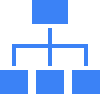
Audit Security
ISO 27001 / GDPR

Test Sprint
2-week paid pilot
Automated QA
CI/CD Pipelines
“One Team” mentality > “Us vs. Them” silos.
The ROI of Precision Governance
By 2026, the delta between “managed” and “unmanaged” outsourcing is no longer marginal—it is the difference between market leadership and technical bankruptcy.
The Performance Gap
| Metric | Legacy Outsourcing | Precision Framework |
|---|---|---|
| Rework Rate (Bugs/Features) | 28.4% | < 7.2% |
| Onboarding Velocity | 42 Days | 4.5 Days |
| Knowledge Portability Score | 15% (Low) | 89% (High) |
| Deployment Frequency | Monthly | On-Demand |

320% ROI
Average return on investment within 12 months when implementing Hard-Coded Quality Gates and automated CI/CD oversight.

-60% Breach Risk
Reduction in vulnerability exposure by mandating Snyk/SonarQube scans at the PR level before vendor code merges.
The AI Multiplier
Teams utilizing AI-Augmented Oversight detect logic flaws 40% faster than traditional peer-review methods.
2026 Global Risk Index
Geography is no longer about distance—it’s about Sync Density. Use this index to match your project complexity with the appropriate regional risk profile.
LATAM
Tier 1 Sync
Best for Agile/Rapid Iteration where real-time collaboration is non-negotiable.
- Golden Overlap: 6-8 Hours
- Cultural Alignment: High
- Avg. Senior Rate: $65-$95/hr
E. Europe
Tier 1 Tech
Best for Complex Engineering, Infrastructure, and R&D projects.
- Golden Overlap: 3-5 Hours
- Technical Depth: Exceptional
- Avg. Senior Rate: $55-$85/hr
SE Asia
Tier 1 Scale
Best for Maintenance, QA, and Scale operations with high volume.
- Golden Overlap: 0-2 Hours
- Scalability: Unlimited
- Avg. Senior Rate: $35-$60/hr
Knowledge Loss Prevention
Without a “Bus Factor” protocol, you lose 40% of project intelligence for every developer that leaves the vendor team.
2026 Mandate: Automated Offboarding
Every commit must be linked to a verified AI-summary and peer-reviewed documentation entry to ensure 100% IP portability.
Portability Score
Required for “Safe” vendor rating
Hard-Coded Quality Gates
In 2026, we don’t “trust” vendors to write good code. We automate the rejection of bad code. Here are the thresholds required to prevent technical bankruptcy.
The “Definition of Done”
| Governance Pillar | Target Metric | Blocking Action |
|---|---|---|
| Test Coverage | > 85% Unit Coverage | PR Merge Blocked |
| Security Vulnerabilities | Zero Critical/High (Snyk) | Build Failure |
| Cognitive Complexity | < 15 per function | Refactor Mandate |
| Documentation Sync | 100% PR-to-Doc match | Release Blocked |
Vulnerability Decay
Unmanaged vendor code sees a 22% increase in security vulnerabilities per quarter. Automated oversight reduces this to < 3%.
The $3.61 Reality
Every line of “Black Box” code (undocumented/untested) carries an average debt of $3.61/LOC by Year 2.
Estimated Savings
$180,500+
Saved per 50k lines of code through strategic governance.
Protect Your Engineering ROI
The data is clear: Outsourcing is only a “saving” if the code is verifiable, portable, and secure.
Engineering Flow & Economics
Stop measuring “Hours Worked.” In the 2026 AI-augmented landscape, we measure Lead Time to Value and the Economic Efficiency of every commit.
The DORA Benchmark
Deployment Frequency
Elite
Multiple deploys per day via automated pipelines.
Lead Time for Changes
< 24h
From first commit to production-ready code.
Change Failure Rate
< 5%
Percentage of deployments resulting in service degradation.
The “Wait Time” Tax
In unmanaged outsourcing, code sits in “Review Pending” or “QA Queue” for 65% of its lifecycle.
Governance ROI: +40% Flow
By mandating Trunk-Based Development and AI-Peer Reviews, we reclaim 16+ hours of engineering time per developer/week.
SLA vs. SLO
We don’t just track Service Level Agreements (SLA). We track Service Level Objectives (SLO) for the vendor’s internal engineering health.
- PR Response: < 4 Hours
- Build Success Rate: > 98%
- MTTR: < 2 Hours
Liquidity of Labor
The ultimate test of governance is Offboarding Velocity. If you cannot replace a vendor team in 14 days, your engineering department is a “hostage asset.”
Lock-In Risk
LOW
Verified by Monthly Portability Audits

The Bottom Line
The objective of strategic governance is to convert Outsourcing from a risk-heavy expense into a Scalable Infrastructure Asset. By controlling the data, the code standards, and the exit gates, you ensure that your vendor serves your roadmap—not the other way around.